
I Was the Son of a Librarian
My mom, now deceased for over a decade, worked as a librarian in the 1970s and was a decades-long member of the American Library Association (ALA). That makes me one of the many thousands of Americans who grew up as the children of librarians.
Despite our numbers, librarians’ families are generally an invisible community. For example, I can’t think of any TV shows or movies that featured librarians as parents, so we don’t get any Hollywood representation.
Because our stories are so rarely told, I’m sharing a few stories now.
Saturdays in the Library
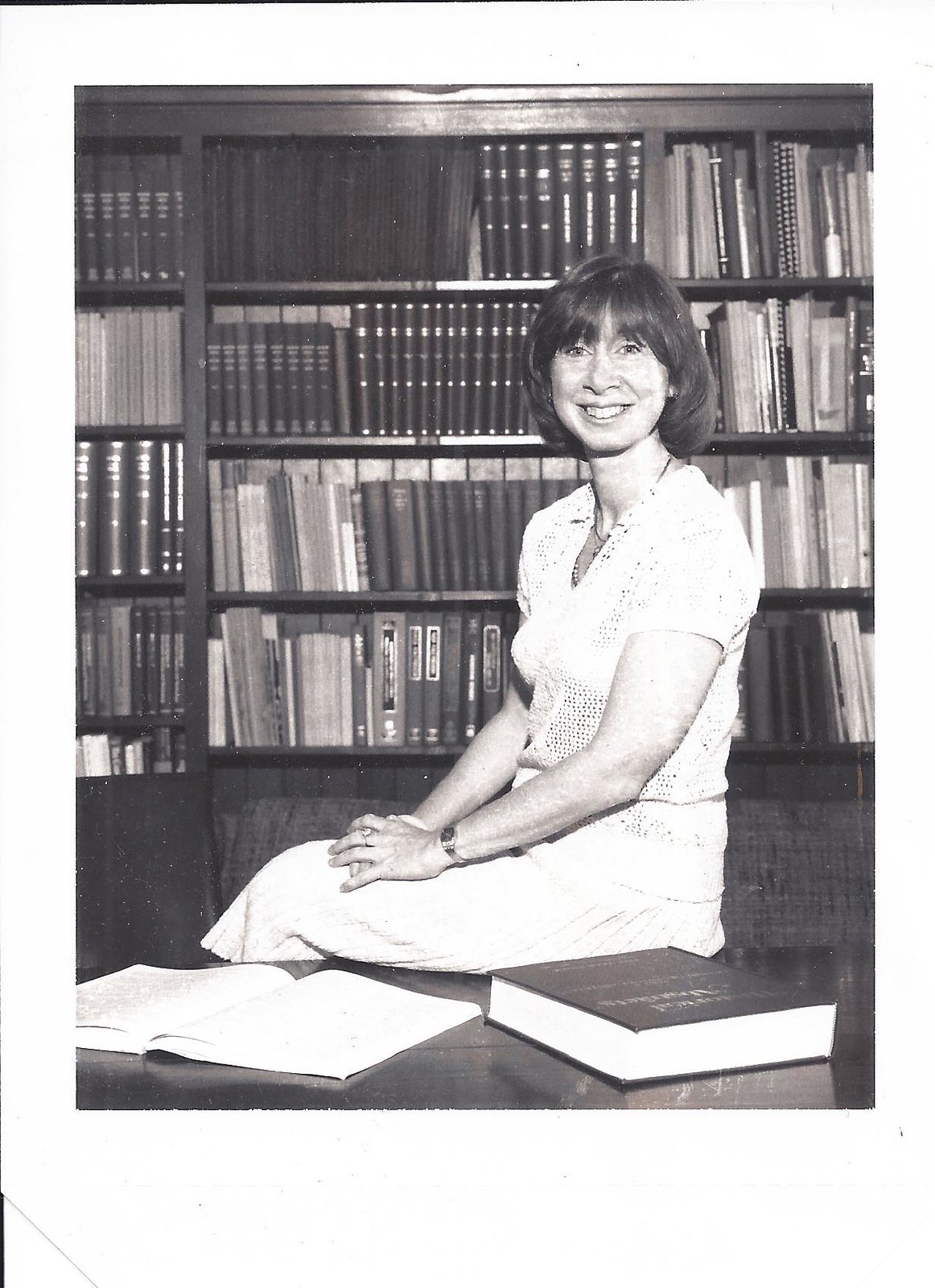
Gail Schlachter at Cal State Long Beach circa mid-1970s
My mom worked as a reference librarian at Cal State Long Beach in the mid-1970s. She was the single parent of two children (me and my sister, 3 years older than me), working full-time and living on a librarian’s salary.
This was an era before workplaces routinely offered childcare to their employees. When mom had to work the reference desk on weekends or other days we weren’t in school, she couldn’t always obtain or afford childcare. Instead, she’d schlep her two young children with her to the library while she worked. She’d set us up in a corner of the library, away from the reference desk but in line-of-sight. We’d play, make art, and read while she worked.
As kids, we didn’t love this. It meant we’d be stuck indoors on beautiful sunny Southern California days. And if we had to be indoors, we’d much rather watch TV. Nowadays, if we had to go to the library with mom, she could set us up with an electronic device so we could binge-watch TikTok videos for hours.
Back then, we didn’t have anything so portable as a mobile device for entertainment. Instead, we brought all of our entertainment with us, which meant we’d bring stacks of our own books and art supplies, enough to keep us entertained, or at least distracted, for hours. I was a geography nerd back then, so I would also bring my 12-inch globe. I’d spend hours spinning the globe and memorizing far-away country names and capitals and rivers and mountain ranges. I can only imagine how I must have looked to library patrons…a young child in the library’s corner, randomly studying his globe.
My sister and I were good kids, mostly, and we didn’t want to make trouble for our mom as she worked. But we were kids, and sometimes youthful energy would overwhelm us. We’d start getting antsy and rowdy as kids do. Our mom would have to shush us, as librarians are always stereotyped as doing.
Family Vacations at the ALA Annual Meeting
Mom attended the ALA Annual Meeting faithfully. The conference was usually a highlight of her year—a chance for her to see her friends and colleagues and nerd out on librarianship. Bringing two small kids in tow surely wasn’t ideal for her, but it was her reality.
She made the best of the situation. We’d tag along with her to the social events. We enjoyed the free food, but we were bored by the adult conversations. The novelty of having young children at the professional event delighted the other attendees. Whenever I run into one of mom’s friends from the old days, they will inevitably (and truthfully) say “I remember when you were this tall!”
For us as kids, the conference exhibits were the highlight of the Annual Meeting. The 1970s was a different era: libraries had money to spend, and publishers competed to get it. The publishers would put on lavish displays in the exhibit hall, their booths loaded with free schwag. We’d grab an ALA totebag and then make our way up and down the exhibit aisles, taking one of everything. It was a bit like Halloween, except we didn’t have to say “trick or treat.” Many vendors had candy and pencils or pens, which we grabbed anyway despite their banality, but occasionally we’d find little toys or stuffed animals or items we could actually enjoy. We’d take our stuffed bags up to the hotel room and compare our loot, showing off the goodies we had found but our sibling had missed.
After my mom transitioned into the publishing industry, libraries remained a part of our family vacations. We’d go check out the local public libraries to see if they had copies of my mom’s books. It would be a great joy being in some obscure (to us) corner of the country, seeing my mom’s books on the shelves and imagining how she was helping people we’d never meet.
An Archivist’s Tale
My mom kept papers from everything. We sorted through dozens of boxes of papers after her death. She kept our art doodles from the long afternoons in the Cal State Long Beach library. She kept the internal staff newsletters for the Cal State Long Beach, written on typewriters and mimeographed. She kept her ALA papers, which now reside at the ALA Archive at University of Illinois. She kept a complete collection of the hundreds of books she published, which now reside at San Jose State University.
Like my mom, I’m an archivist. Over the years, I’ve cleared out some of my papers, but I still have boxes and boxes of papers in my garage. I have all of my childhood correspondence, papers from jobs when I was a young adult, and printouts of virtually every email I sent and received in the 1990s. I don’t envy the chore my kids will face sorting through my paper archives if I don’t clean them up before I die. At least my electronic archives won’t force them to park one of their cars outside their garage.
Freedom of Expression
My mom firmly believed in public access to information. She saw libraries as a way to reduce information divides and make available, free of charge, credible and reliable information to everyone.
For decades, this function of libraries has been under attack by censors who wish to control information flows to advance their normative or partisan ends. The library community is one of the OG defenders of free speech. In this respect, libraries are like canaries in the free speech coal mine, usually at the vanguard of the censorship battles. My mom started fighting those battles in the 1970s, and I’m sure she’d be aghast today at how censors continue to aggressively implement the same condemnable playbook decades later.
Even as the Internet plays an increasing role in our information ecosystem, the services provided by libraries remain a threat to those in power, and efforts to censor libraries are taking place in parallel with their efforts to censor the Internet. Just as libraries have been targets for decades, censors are trying to shape Internet content to serve their normative or partisan objectives. I’ve seen this story before through my mom’s eyes. As a law professor, I spend much of my professional time today carrying the OG free speech banner, with an emphasis on digital battlegrounds. My mom’s legacy includes my efforts to stand up for the freedom of information.
About the Author: Eric Goldman is a law professor at Santa Clara University School of Law in California. He acknowledges Dusty Springfield for the title inspiration.
Eric, I really enjoyed reading this. Something that many immigrant kids can probably confirm is that libraries tend to play an outsized role with immigrant families. Immigrant families often do not have the financial resources as non-immigrant families so libraries become a really important source of entertainment and learning resources. Books are a fantastic escape allowing kids who may not be able to travel as much as other kids a way to see the world and libraries provide a seemingly unlimited source of books. I know the Internet has changed things but it is disheartening to see how poorly stocked the shelves are of public libraries.
I miss your mother every day. She was a good friend.
Wrote about her here.
https://alair.ala.org/server/api/core/bitstreams/cd4ec219-13a9-48ee-b7b3-0a21680744c4/content